




DPF = Domain Pillar Function Model


 Frameworks
Enterprise AI Fails When Domain Structure Is Missing
 Unified Domain Architecture
A Repeatable Taxonomy for
AI-Ready Enterprises
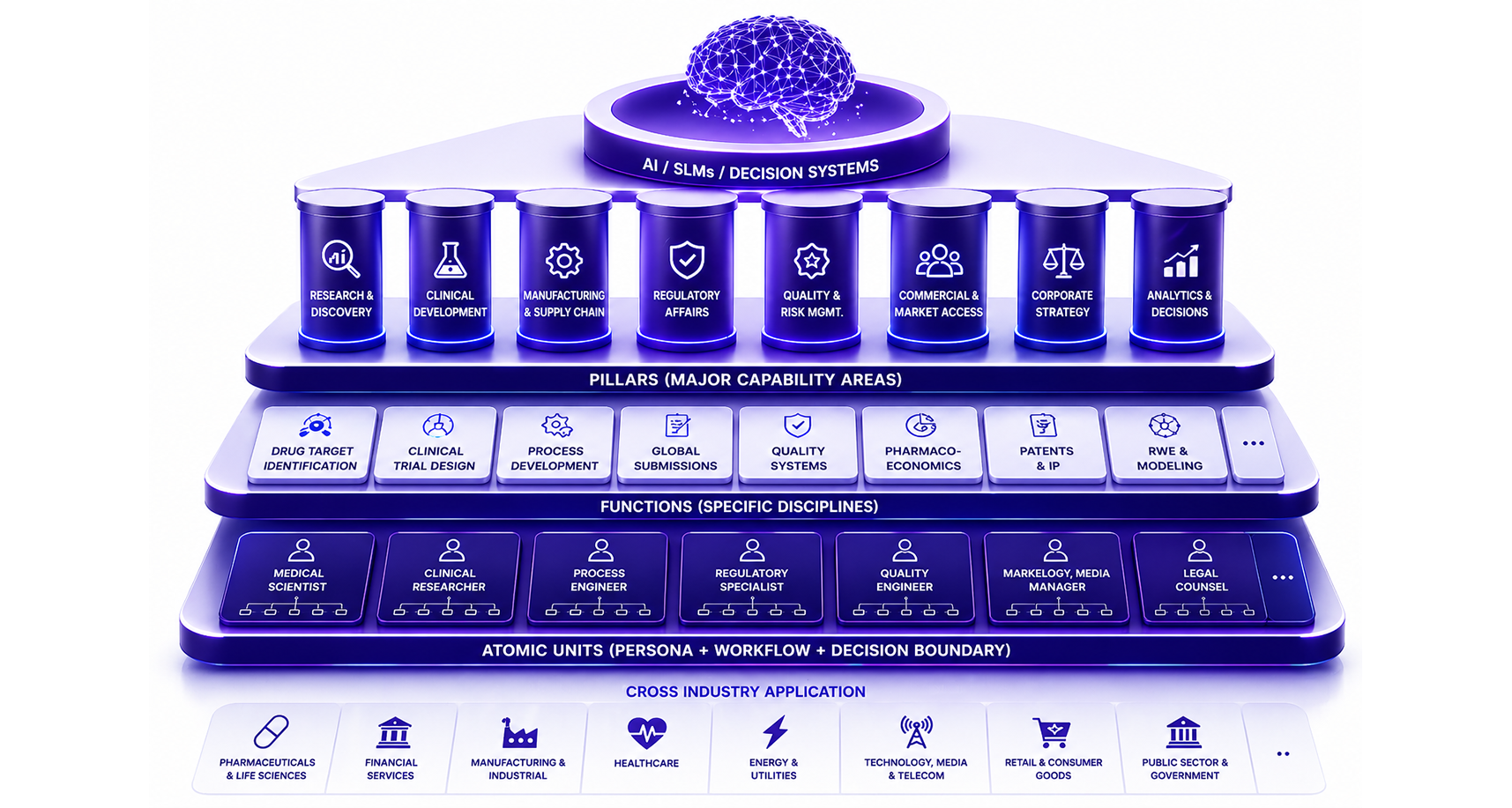
DPF is defined as a structured enterprise taxonomy that moves from high-level industry context to pillars, functions, and atomic modeling units, helping standardize AI scoping, domain expansion, and governance.
01
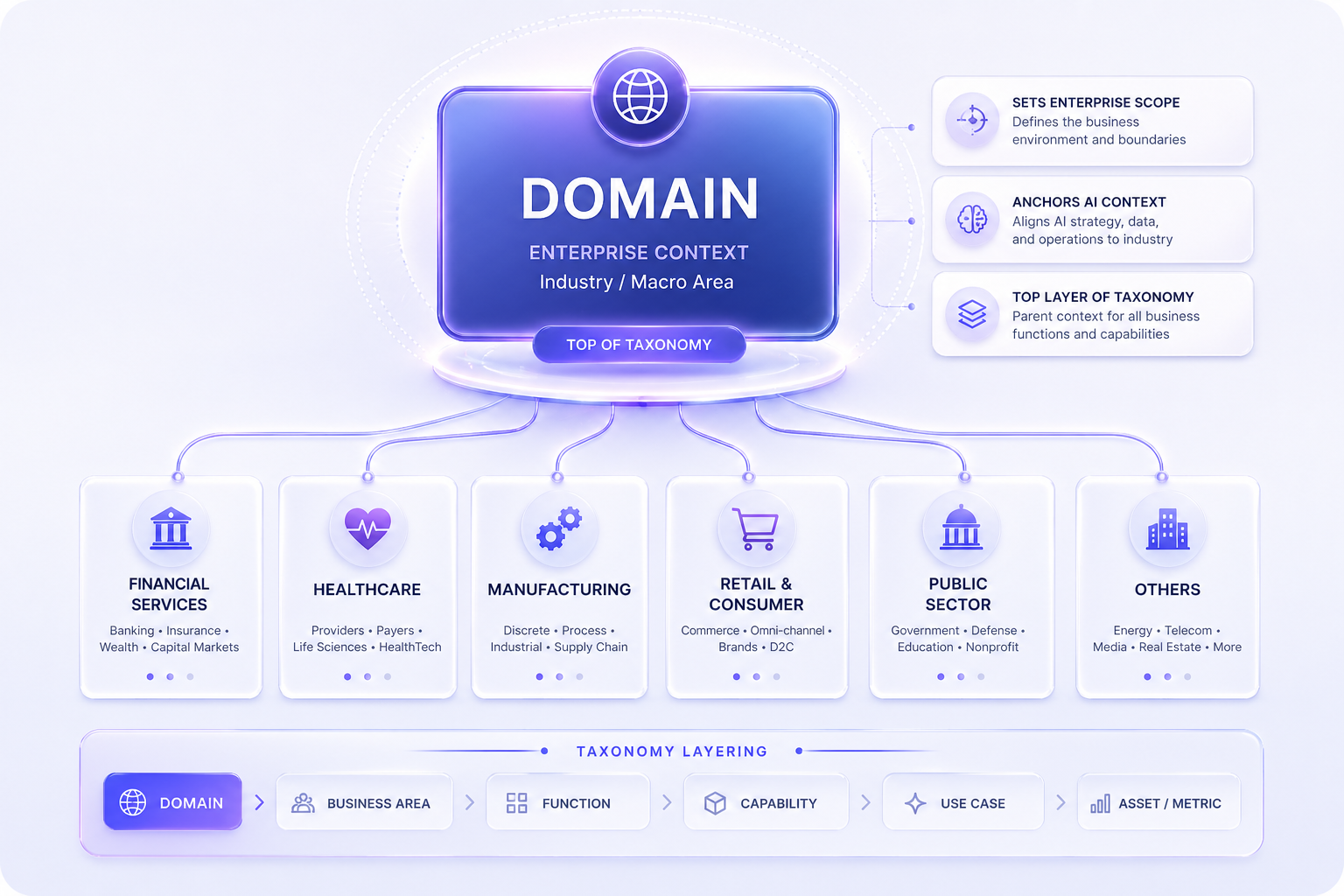
Domain Defines the Enterprise Context
The Domain is the highest-level industry or macro-area. It establishes the business context in which AI systems, knowledge structures, and decision workflows must operate.
- Sets the high-level enterprise scope
- Anchors AI around industry context
- Creates the top layer of taxonomy
02
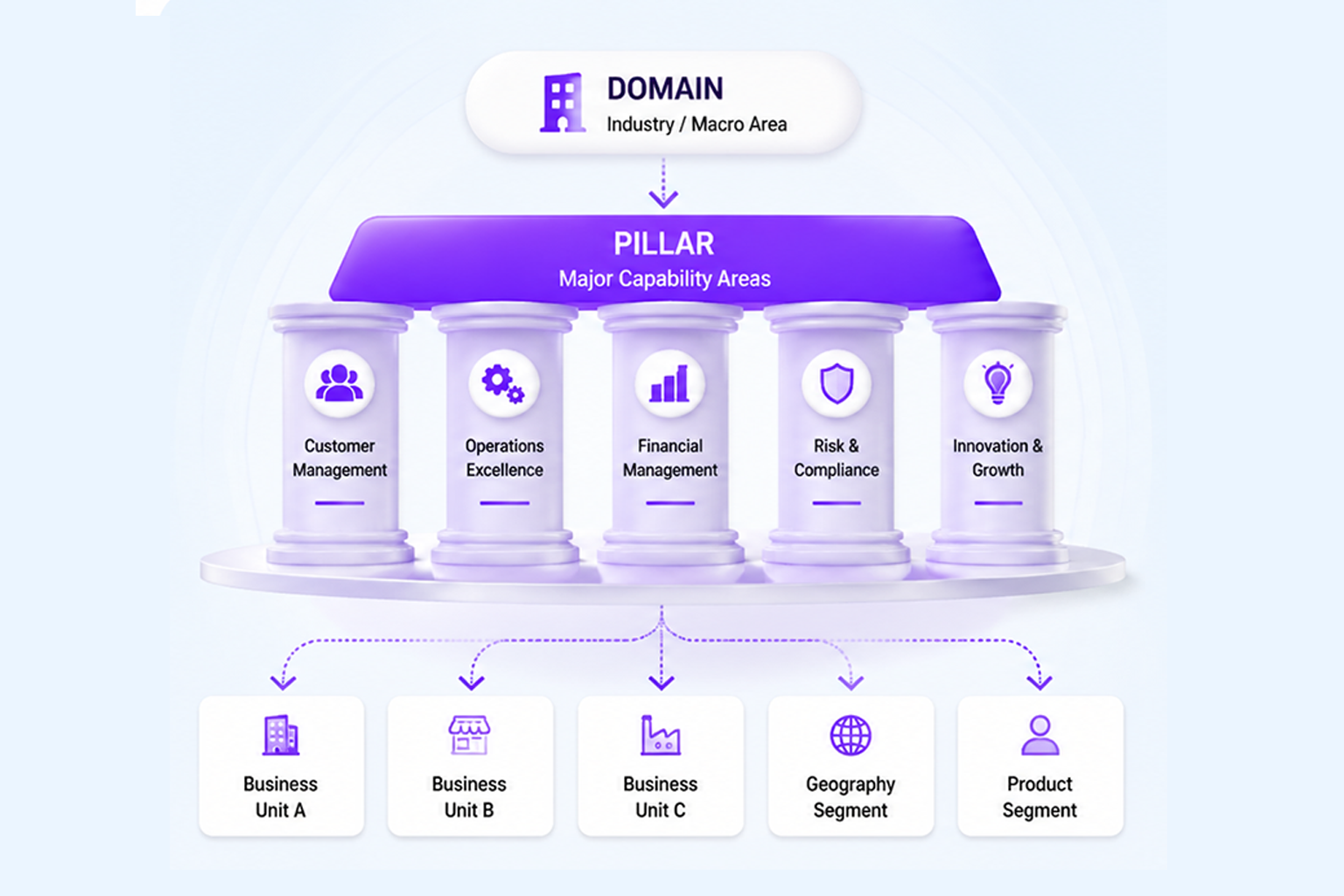
Pillar Maps the Major Capability Areas
A Pillar represents a major capability area within the domain. It aligns the structure to how enterprises organize business segments, operating units, and functional value chains.
- Aligns with industry capability areas
- Reflects enterprise operating structures
- Organizes AI opportunities by segment
03
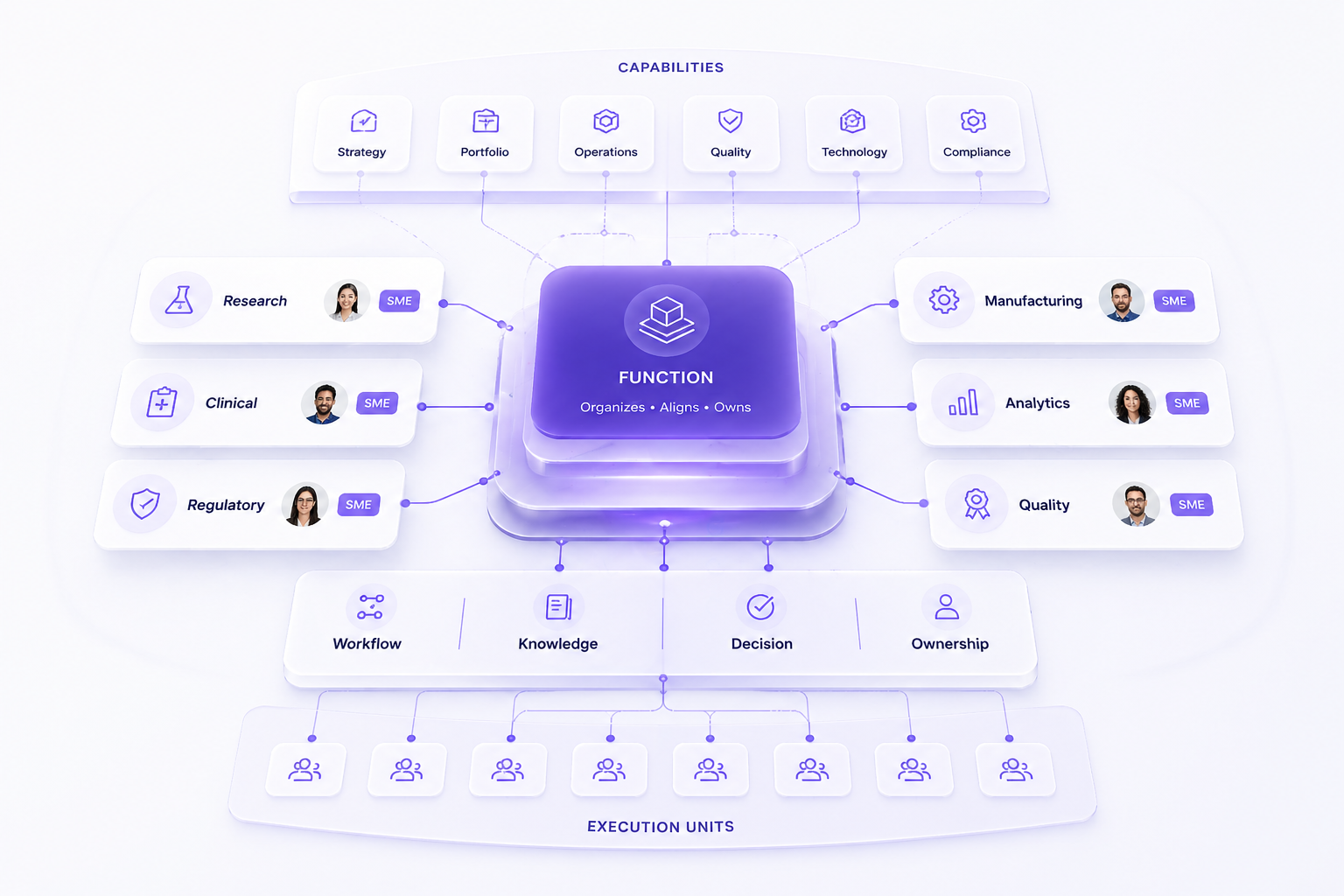
Function Organizes Discipline and SME Ownership
The Function layer identifies the specific discipline or SME responsibility area. It helps map expertise, workflows, knowledge sources, and decision responsibilities more precisely.
- Defines discipline-level responsibilities
- Improves SME and workflow alignment
- Reduces ambiguity in knowledge mapping
04
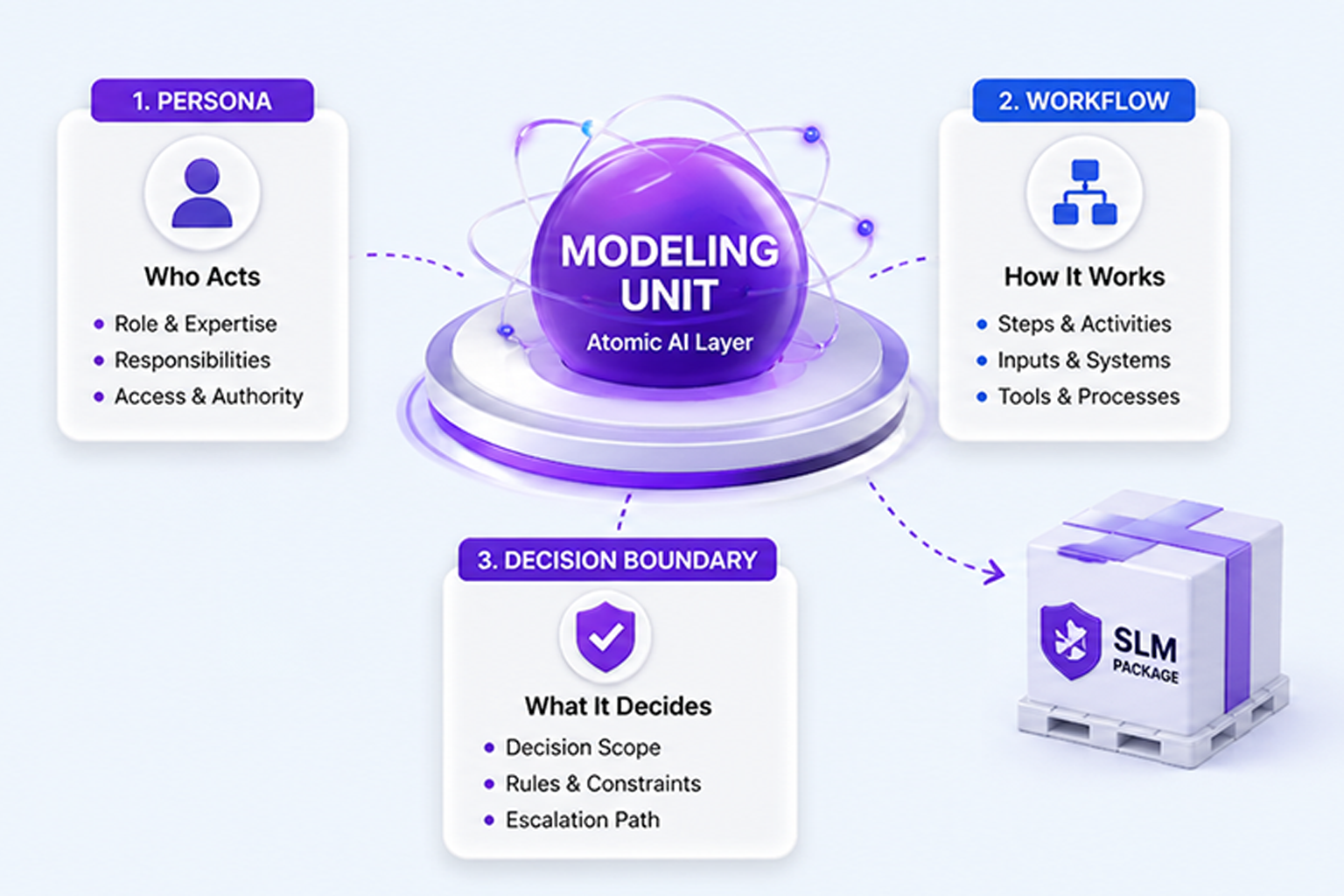
Modeling Unit Becomes the Atomic AI Layer
The Modeling Unit is the atomic unit of design: persona, workflow, and decision boundary. It is where domain intelligence becomes specific enough for governed modeling and SLM packaging.
- Combines persona, workflow, and decisions
- Clarifies ownership and execution boundaries
- Enables repeatable SLM packaging
Frameworks
Designed for Cross-Industry Expansion

Pharmaceutical & Life Sciences
Model for clinical, regulatory, safety, medical, quality, and evidence-driven life sciences workflows.
Investment, Venture & Portfolio
Structured for research, due diligence, market scanning, portfolio review, and investment decision workflows.
Finance & Banking
Built for financial analysis, risk review, compliance, operations, governance, and banking intelligence use cases.
Engineering, Procurement & Construction
Supports project controls, procurement workflows, technical review, risk tracking, and execution governance.
Healthcare Delivery
Designed for care operations, clinical coordination, service workflows, compliance, and healthcare decision support.
Tech, Media & Telecom
Covers product, operations, service workflows, customer intelligence, and fast-changing digital business environments.
Manufacturing & Industrial
Applies to plant operations, maintenance, quality systems, process control, and industrial workflow intelligence.
Retail & Consumer Goods
Enables structured models for merchandising, supply chains, demand signals, customer operations, and retail workflows.
Education & Research
Useful for academic operations, research synthesis, learning workflows, knowledge management, and evidence mapping.
What DPF Enables
Turning Domain Structure Into Governed AI Execution
DPF helps enterprises move from scattered use cases to structured AI programs by clarifying scope, SME ownership, data needs, model boundaries, governance, and expansion paths.

Clear AI Scoping
Define each AI use case with the right domain, workflow, decision boundary, and enterprise context before execution begins.

SME Alignment
Map expert responsibility areas early, so model design reflects real ownership, review paths, and domain accountability.

Data Readiness
Identify what data is needed, where it belongs, and how it supports workflows, decisions, and model performance.

SLM Packaging
Create consistent domain-specific model boundaries for FoRMLM, SparLM, and Mind Assemblies use cases.
Governance Readiness
Improve auditability, traceability, regulatory clarity, and responsible AI documentation from the start.
FAQ’s
Need Help? We’ve Got You Covered.
Find clear answers on how DPF structures enterprise domains, aligns SMEs, and supports AI-ready execution.
Can't find your answer?
Connect with our team to explore how DPF can support your enterprise AI architecture.
DPF stands for Domain–Pillar–Function model. It is a structured enterprise taxonomy that organizes industries into domains, capability pillars, functions, and modeling units for AI-ready execution.
AI initiatives often fail when domain knowledge, workflows, data, and SME ownership are unclear. DPF creates a common structure so use cases can be scoped, governed, and scaled consistently.
DPF defines the business domain, major capability areas, functional ownership, workflows, and decision boundaries before model design begins. This reduces ambiguity and improves execution clarity.
The four layers are Domain, Pillar, Function, and Modeling Unit. Together, they move from broad industry context to atomic AI design units made of persona, workflow, and decision boundary.
DPF maps specific functions to expert responsibility areas, helping enterprises identify who owns the knowledge, who validates outputs, and where decisions should be governed.
DPF creates clear domain and function boundaries that help define focused SLM scopes. This supports FoRMLM model creation, SparLM decision assurance, and Mind Assemblies architecture.
DPF is designed for cross-industry expansion, including Pharmaceutical & Life Sciences, Finance & Banking, Investment & Portfolio Management, Healthcare, Manufacturing, Retail, Education, and Logistics.

- Image
- SKU
- Rating
- Price
- Stock
- Availability
- Add to cart
- Description
- Content
- Weight
- Dimensions
- Additional information